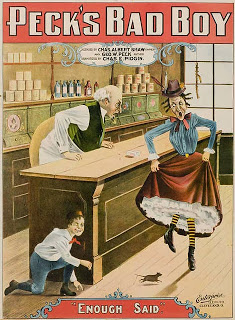
As kids, my friends and I were constantly in trouble. Oh, we weren’t sent to jail or juvie hall. But we spent a lot of time in detention, running laps, cleaning trash on the school grounds, and getting the “pow pow”—yes, at my junior high school, after certain offenses, we were sent to Room 8 to get paddled by the teacher with a board that mirrored the “Fraternity Paddle” featured in Animal House.
Over the years, I have written often of our youthful transgressions. They still seem funny to me. Maybe Mrs. Vance didn’t like thumb tacks being placed on her chair before English class, but it seemed like a good idea at the time. And since her girdle was so thick she couldn’t feel them, what was the harm?
I’m not sure rural kids today can egg police cars, get chased through the vineyards, get caught, and then have the police chief laugh and say he did the same thing at their age. The punishment? We had to wash their cars.
I’ve received e-mails and letters suggesting that such tales of yore are incendiary, dangerous, even irresponsible. What can be gained from romanticizing illegal, anti-social, even dangerous deeds? Isn’t it just encouraging youngsters to disobey laws or school rules?
One is perplexed. America’s most famous youngsters, Huck Finn and Tom Sawyer, are nothing if not mischievous. In fact, they are revered for their pranks. Yet, even in those fictional instances, there were consequences. Coiling up a dead rattlesnake and placing it on Jim’s bed – though funny on its face – resulted in Jim’s getting bitten by a live snake. That’s not only not funny – it’s life-threatening. Faking their own deaths and attending their own funeral was hilarious to them – but probably not to their kin and grieving townsfolk.
Yet, when we read it, we chuckle at their devilishness, cheek, and originality.
The title of each book was “The Adventures of …”(Tom Sawyer and Huckleberry Finn). Clearly, Mark Twain equated tricks and pranksterism with “adventures.” That might be a clue.
One Christmas, my Grandfather was given a present. I have it on my bookshelf today. It is inscribed with his name, and the date—December 25, 1901. He was eight years old. The book was entitled Peck’s Bad Boy. This is not a book for the politically correct 21st century.
Not many of us today would be on speaking terms with young Henry Peck. He was a bad boy extraordinaire. The stories are filled with baby calves carried up stairs, stolen horse-drawn wagons, and melons filched in the dark of night. Henry’s backside is well-acquainted with his father’s switches.
Why did parents at the turn of the last century think that books about devilish boys were good for young kids? Whether one is talking about Huck Finn, Tom Sawyer, or Henry Peck, the theme is basically the same.
Throughout history, societies have realized that young men have to be taught certain skills and rules in order to survive as adults. We’re all familiar with the initiation rites of indigenous tribes that turn boys into men.
As America became more civilized, these “rites of passage” seemed to disappear – or at least become less codified.
Learning how to “play the game” is important. If folks don’t follow the rules, communal society is impossible. But societies can’t advance unless someone somewhere steps outside the box and breaks the current rules. From Copernicus to Columbus, men and women have stretched the limits of established thinking and taken us to places unimagined just days before their breakthroughs.
Risk takers, adventurers, pioneers, creative artists – call them what you will – move civilization forward. They also can cause a lot of pain–sometimes death.
How does modern society train a new generation to take risks–to be creative?
It can’t “lay down rules” for breaking rules. Legislating spontaneity is an oxymoron. By definition, the actions must be original, random, and “anti-establishment.”
“Play” is clearly a way to cultivate originality and creativity. The child sees the existing order, and then, on his own, develops a trick or scheme that is contrary to that order. He counters the established norm.
There are lots of rewards for breaking the rules–not the least of which is laughter. Attention is another byproduct. Breaking the rules establishes an individual identity. Suddenly he’s unique. Others walk down stairs. He slides down the banister.
Society, however, can’t function if everyone tries to slide down the banister. That’s where punishment comes to bear. Without punishment, the rules haven’t been completely broken—acceptable norms aren’t clearly defined.
That’s where today’s helicopter parents blow it. They think of punishment as a failure—as somehow inappropriate. If the kid disobeys (establishes his separateness), the mother talks to the child about it and explains why it is wrong, instead of spanking him or sending him to his room. If he cuts class and the principal suspends him, the parent rushes in, lawyer in tow, so it “doesn’t go on his permanent record.”
The kid is robbed of his unique identity, of the chance to establish his “otherness.” He then either becomes an uncreative drone or has to search out more bizarre ways to separate himself from Mommy and Daddy’s world. Drugs, anyone?
That’s why pranks and punishments need to be encouraged. Our grandparents’ parents knew that. We’re so much smarter than them that we don’t. Today, it’s pull a prank, call a cop. Either that, or mommy bails the kid out. The punishment phase of growing up is way out of whack.
Kids make mistakes. And kids intentionally break rules. Either way, they need to be allowed to pay for it in a quick, defined way: no TV, paint the fence, run laps, whatever.
That’s the lesson of incorrigible Henry Peck. For each transgression, he is punished — usually on the backside, with a board. The lesson is learned. The moral order is affirmed. His identity is established, as is the role of his father. The world makes sense.
Authority figures establish the guidelines and lay down the rules. Children need to be encouraged to challenge them. More importantly, children need to pay the price for defying the established order. It’s what defines their “otherness” and allows them to become separate, creative individuals.
Shrinks don’t get it: Beatings bad, spankings good. It’s not just about spoiling: Spare the rod and you cheat the child.
George Peck wrote, “Not all boys are full of tricks, but the best of them are.” How come my grandfather’s parents knew that and we don’t?